How To Win?

Learn how to win in life through deliberate practice, training harder, and over preparation. Discover the winning philosophy of “train hard fight easy” and how it makes winning easier for you. Enjoy.
Table of Contents
- Introduction
- Train Hard Fight Easy: Winning Philosophy
- The Science of Deliberate Practice and Overlearning
- Training Harder: Practice Under Pressure
- Systems, Reps, and Feedback Loops
- A 3-Domain Practice Blueprint (Body, Mind, Spirit)
- Recommended Action
- Conclusion
- FAQ
- Support Us
- Author Bio & Social
Introduction
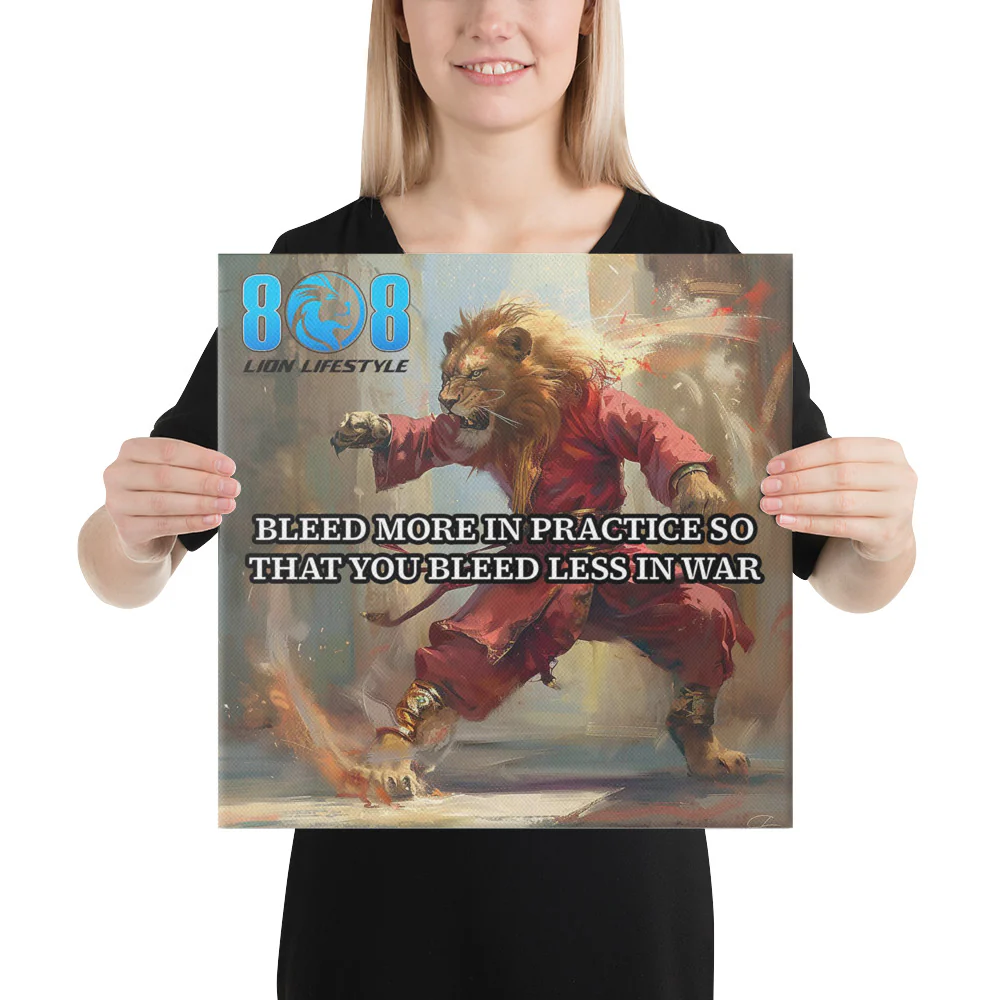
The battlefield is rarely the first time you face hardship—it’s only the most honest. The outcomes there are decided long before the first move, shaped by habits, repetitions, and systems that forged your character in private. That is why warriors, athletes, and creators adopt the winning philosophy: bleed more in practice so that you bleed less in war. When you practice under pressure, refine your technique, and strengthen your spirit, you make excellence your default. This is not about increasing pain; it’s about preparing beyond the standard so that challenge becomes familiar, not frightening. With faith as your compass and evidence-based training as your method, here you will learn how to win.
Train Hard Fight Easy: Winning Philosophy
“Bleed more in practice so that you bleed less in war” is a call to front-load effort. It says: invest discomfort now to reduce damage later. In practical terms, that means identifying your critical moments—presentations, negotiations, spiritual tests, health crises—and building reps that simulate those exact conditions. When the day arrives, you’re not improvising; you’re executing.
Three truths sit beneath this philosophy:
- Familiarity reduces fear. The brain flags novelty as threat. By exposing yourself to challenge in controlled settings, you convert novelty into normal.
- Technique under stress beats talent at rest. Raw ability collapses when pressure spikes. Practicing your techniques under pressure will help you make winning easier.
- Preparation preserves peace. You can’t control the storm, but you can strengthen the vessel. Systems you practiced yesterday carry you through tomorrow’s waves.
Faith perspective: Scripture reminds us to be sober and vigilant. Preparing well isn’t doubting God—it is stewardship. We honor the gifts He gave by training harder so we can serve when it counts.
The Science of Deliberate Practice and Overlearning
High performers don’t just practice; they practice deliberately. Deliberate practice isolates skills, pushes the edge of ability, solicits immediate feedback, and repeats with full attention. Unlike mindless repetition, it is designed to change the brain. Neuroscience shows that targeted, effortful practice strengthens neural pathways and speeds signal transmission. Over time, the activity moves from slow, conscious processing toward efficient, automatic execution.
Two key ideas support the philosophy:
- Deliberate practice: Break complex tasks into components (setup, execution, review). Train each component just past your comfort zone. Measure performance (time, accuracy, decision quality) and adjust immediately.
- Overlearning: Continue practicing well beyond initial mastery so that skill integrity holds under fatigue. Overlearning builds redundancy—your technique survives pressure, distraction, and time.
Evidence-informed insights:
- Spacing and variability beat cramming. Practice sessions spread over days harden memory and skill. Varying conditions (location, tempo, equipment) builds flexible competence.
- Interleaving (mixing skills) improves long-term retention and transfer. Rotate drills so your brain must repeatedly retrieve the right solution rather than rely on autopilot.
Spirit-led alignment: overlearning mirrors discipleship. You don’t read truth once; you abide in it—again and again—until it becomes who you are. Faith not tested, cannot be trusted. Can you hold onto your faith when life gets hard? When you practice your faith under controlled hardship, walking with your faith becomes easier when life truly becomes heavy on your heart.
Two key ideas support the philosophy:
- Deliberate practice: Break complex tasks into components (setup, execution, review). Train each component just past your comfort zone. Measure performance (time, accuracy, decision quality) and adjust immediately.
- Overlearning: Continue practicing well beyond initial mastery so that skill integrity holds under fatigue. Overlearning builds redundancy—your technique survives pressure, distraction, and time.
Evidence-informed insights:
- Spacing and variability beat cramming. Practice sessions spread over days harden memory and skill. Varying conditions (location, tempo, equipment) builds flexible competence.
- Interleaving (mixing skills) improves long-term retention and transfer. Rotate drills so your brain must repeatedly retrieve the right solution rather than rely on autopilot.
Spirit-led alignment: overlearning mirrors discipleship. You don’t read truth once; you abide in it—again and again—until it becomes who you are. Faith not tested, cannot be trusted. Can you hold onto your faith when life gets hard? When you practice your faith under controlled hardship, walking with your faith becomes easier when life truly becomes heavy on your heart.
Training Harder: Practice Under Pressure
In medicine and elite training, training harder exposes you to manageable doses of pressure so your physiology and psychology adapt. Heart rate, breathing, and attention narrow under stress; rehearsal under realistic constraints teaches you to self-regulate and stay skillful. It is a scientific fact that the same pressure that can break a pipe makes diamonds. Will you break under pressure or will you shine like a diamond?
Components of stress-smart practice:
- Progressive exposure: Start small—a timer, a witness, a camera—then escalate: shorter deadlines, higher stakes, noisier environments. Your threshold rises with each wave.
- Pre-performance routines: Fixed sequences (breath, posture, cue word) steady attention. When practiced, they become anchors in chaos.
- Failure rehearsal: Practice failure modes—missed cues, equipment glitches, tough questions—so you learn fast recovery. Anxiety drops when your mind says, “We’ve been here. We know the next step.”
- After-action reviews: Immediately debrief: What was the mission? What happened? Why? What will we change? Capture lessons in a simple log; convert them into the next drill.
Data-backed principles:
- Perceived control predicts performance under stress. Training harder increases agency—clear steps, repeatable routines—protects execution.
- Physiological regulation (box breathing, nasal breathing, scripted exhales) lowers arousal quickly enough to keep fine motor skills and working memory online.
Faith application: David faced lions before Goliath. Early trials were practice battles—not punishment. Each victory under tension deepened trust in God and refined courage.
Systems, Reps, and Feedback Loops
Champions don’t rely on motivation; they rely on systems. A system is a repeatable set of steps with triggers, tools, and metrics. Systems reduce cognitive load, protect focus, and create compound gains.
Design your feedback loop:
- Cue: What starts the behavior? (Alarm, calendar block, checklist)
- Routine: The exact actions in order (e.g., 90‑second breath reset, 3‑minute warm-up, 25‑minute deep-work sprint, 2‑minute log).
- Measure: One metric per skill (accuracy %, words drafted, sets completed, recovery heart rate).
- Adjust: Weekly tweak based on results: increase difficulty 10–15%, swap a drill, add a constraint.
Track leading indicators, not only outcomes. You can’t control promotions, markets, or applause, but you can control starts, sprints, setups, and sleep. Leading indicators predict outcomes when compounded. For example:
- Body: number of mobility minutes and protein servings.
- Mind: number of focused blocks completed.
- Spirit: prayer minutes and scripture reflections logged.
Make it visible. Use a simple scoreboard you can see at a glance. What’s visible is actionable; what’s hidden drifts.
A 3-Domain Practice Blueprint (Body, Mind, Spirit)
Here is a blueprint to bleed more in practice so that you bleed less in war across the core domains of your life. Start with minimum viable reps; then escalate intensity or complexity as skill stabilizes.
Body (Resilience & Energy):
- Skill focus: Strength, mobility, recovery.
- Daily drill (20–30 min): 5‑minute mobility (hips, thoracic, ankles), 15‑minute strength circuit (push, pull, hinge, squat), 2‑minute nasal-breath cool-down.
- Stress inoculation: Occasional finisher under time cap; train composure—smooth breathing, full range, clean technique.
- Metrics: Sets completed as prescribed, rep quality score, morning energy rating.
- Micro-prep: Layout clothes, bottle, and mat at night. Pre‑portion protein-rich snacks.
Mind (Focus & Learning):
- Skill focus: Deep work, retrieval, decision-making.
- Daily drill (2–3 sprints): 25 minutes single-tasking + 5-minute log. Interleave tasks (study, write, problem-solve).
- Stress inoculation: Add a constraint—shorter deadline, public commitment, or a single‑take recording.
- Metrics: Sprints completed, words produced or problems solved, decision latency.
- Micro-prep: Clear desk, one task card, timer visible, distracting apps off.
Spirit (Rootedness & Courage):
- Skill focus: Prayer, scripture meditation, obedience in small things.
- Daily drill (10–20 min): Breath prayer, read a short passage, write one obedience step for today.
- Stress inoculation: Practice praise under pressure: when stress spikes, take 60 seconds to thank God specifically, then act on your obedience step.
- Metrics: Days prayed, scriptures reflected, obedience steps completed.
- Micro-prep: Keep Bible/journal visible; cue with an alarm tied to a daily anchor (wake, lunch, shutdown).
This blueprint turns ambition into a calendar of courage. You won’t guess your way to mastery. You will practice your way there.
Recommended Action
Think of your most important goals that you are currently pursuing. Choose one. Then create a plan to prepare for it’s achievement. Implement preparation plan. During execution of preparation, find ways to go above and beyond the basic preparations. Once, these advanced preparations are completed. Then, take actions to achieve goal. Journal after your experience. Did your advanced preparations make achieving your goal easier?
Conclusion
Battles reveal what practice built. When you bleed more in practice so that you bleed less in war, you convert fear into familiarity and talent into trustworthiness. Your systems, rehearsals, and after‑action reviews are not signs of doubt; they are signs of stewardship. Train beyond the standard, anchor your heart in God, and step into your calling with quiet confidence. You now have learned how to win. Use our winning philosophy to training harder and winning easier in life.
FAQ
Q1: Won’t training this hard burn me out?
Hard training is not reckless training. Use progressive exposure and recovery. Overlearning doesn’t mean overtraining; it means repeating correct technique past initial success.
Q2: How do I practice when life is chaotic?
Build a Minimum Viable Day: 2 minutes of prayer, 5 minutes of movement, one 10‑minute deep‑work sprint, and one meaningful connection. Momentum first; volume later.
Q3: What if I don’t know what to practice?
Find your next “battle” and list the three skills that decide it. Ask, “Which 20% of skill creates 80% of outcome?” Practice that subset. Debrief weekly and adjust.
Q4: Can this approach help recovery from illness or setbacks?
Yes. Practice the micro‑skills of recovery: medication routines, sleep hygiene, gentle mobility, breathwork, and faith practices. Small, consistent wins rebuild confidence and capacity.
Q5: How do I keep score without becoming obsessive?
Track leading indicators you control (starts, sprints, sleep, set‑up). Review weekly. Use the scoreboard to guide, not judge.
Support Us
If this lesson built you up, consider supporting our mission. Share it with a friend, enroll them in Lion Wisdom Daily, and invest in our Spartan Practice T-Shirt. Wearing and sharing this empowering wisdom helps us better our world.
Author Bio & Social
Lion Mentor equips believers and builders to live with strength, wisdom, and love—combining scripture, behavioral science, and systems thinking to produce results that lasts. Follow us on social: [Facebook] | [Instagram] | [X/Twitter] | [LinkedIn] | [TikTok]
Recommended Products

Spartan Practice T-Shirt
$19.99
Bleed More Canvas
$55.55

Bleed More Car Magnet
$7.77

Bleed More Sticker
$6.95